
Nature

Beaver Facts and Myths

Separating the Truth from Fiction
by Patrick Owuraku Kwaah, MCA Intern

Beavers in North America have long captured people's imagination with their industrious behaviors and unique adaptations. However, along with the facts, numerous myths and misconceptions about these creatures have circulated. In this blog, we embark on a journey to uncover the truth about beavers while debunking common myths that have persisted through the years.

First, the North American Beaver, Castor canadensis, is the largest living rodent in North America, with adults averaging 40 pounds in weight and measuring more than three feet in length. The North American beaver has 24 subspecies, with a variety found across the continent as a result of the reintroductions of different beavers to different places. Often regarded as North America’s most iconic builders, they play a remarkable and often underestimated role in shaping the continent’s ecosystem. From constructing intricate dams to creating thriving wetland habitats, these industrious creatures are essential for maintaining the balance of nature.


Did You Know?

Mill Creek is home to a number of beavers.
Beavers along the creek signify a healthy waterway and thriving ecosystem.

Beavers have been spotted in Northside, Winton Hills, and the northern wetland areas in the upper watershed communities. Head to the Salway Park Mill Creek Green Way Trail and keep your eyes peeled for these furry creatures or signs of their presence.


Myth 1: Beavers are aggressive and dangerous

The myth that beavers are aggressive and dangerous likely stems from a misunderstanding of their behavior and defensive instincts. Beavers are generally peaceful and tend to avoid confrontations with other animals, including humans. However, if a beaver feels threatened or cornered, it may exhibit defensive behavior. This behavior can include warning signals like tail slapping on the water, vocalizations and even posturing to deter potential threats.

Facts: Beavers do not pose threats to humans and are not predatory animals. Their natural behavior is focused on their survival and maintaining their dams and lodges. Rare instances where a beaver might become more assertive is when it perceives a threat like encroachment of its dams by humans or other animals.


Myth 2: Beavers are destructive pests

Coexistence Strategies: Various coexistence strategies such as flow devices, pond leveling, and tree protection can help minimize the conflicts with beavers.

While beavers can cause challenges for some human activities, they are not inherently destructive pests. Understanding their behavior and using coexistence strategies can mitigate conflicts. Beavers build dams to create wetland habitats, control water flow, and protect their lodges. These dams can sometimes lead to localized flooding, which might be viewed as destructive. Similarly, beavers cut down trees for food and to use in their dam and lodge construction. This can lead to tree damage on private properties.

Fact: Beavers play a vital role in wetland conservation: Their dam-building activities can help create wetlands, which serve as essential habitats for various wildlife and are vital for water filtration and storage. Beavers, also, build dams to control water flow and protect their lodges. Scientists and researchers recognize that beaver activities are essential in creating and maintaining wetland ecosystems, improving water quality, and supporting biodiversity.


Myth 3: Beavers fell trees for food alone

This myth oversimplifies the behavior and reasons behind tree-cutting. Beavers are well-known for their tree-cutting activities, but it is important to understand that they use trees for multiple purposes, not just as a food source.

Fact: While beavers do eat tree bark and woody parts, they also use trees for dam and lodge construction. They similarly use tree branches and logs as underwater caches. These underwater caches of food sustain them through the winter when fresh food is scarce.


Myth 4: Beavers are clumsy and slow on land

This myth arises from the misconception that these animals are primarily aquatic and not well-suited to terrestrial environments. Their webbed feet, waterproof fur, and large, paddle-like tails are well-suited for efficient movement in water. However, beavers are more adaptable and agile on land than many people realize.

Fact: Beavers can move effectively and efficiently on terra firma, demonstrating agility, strength, and adaptability. Beavers can walk, run, and even climb slopes, using their strong legs and sharp claws.


Quick Fact #1

The Giant Beaver, Castoroides, is an extinct genus of enormous, bear-sized beavers that lived in North America, Ohio too, during the Pleistocene era. An adult giant beaver could weigh about 220 pounds.

Quick Fact #2

North American Beavers are monogamous and family-oriented: They live in family units, which typically consist of a monogamous pair and their offspring. They work together to maintain their lodges and dams.

Quick Fact #3

Beavers' teeth grow continuously throughout their lives and daily usage helps to trim them down. If beavers were unable to file down their teeth, they would overgrow which could lead to serious health problems and even death.


(This photograph of a beaver was captured on the Mill Creek in Spring 2023. Photo Credit: Johnny Dwyer of Mill Creek Alliance)

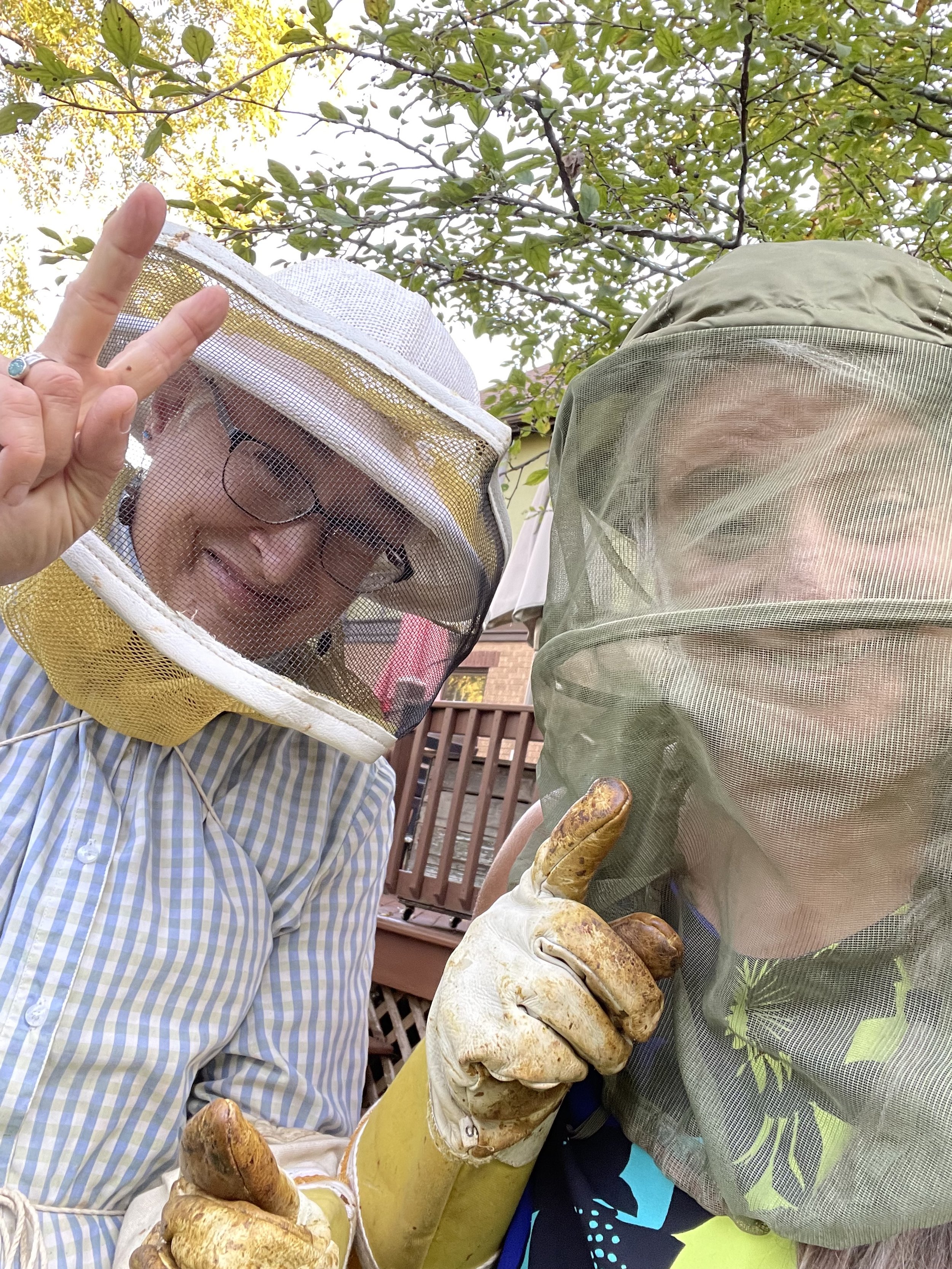
National Honey Bee Day

Why does MCA staff member Linda Keller celebrate National Honey Bee Day? 

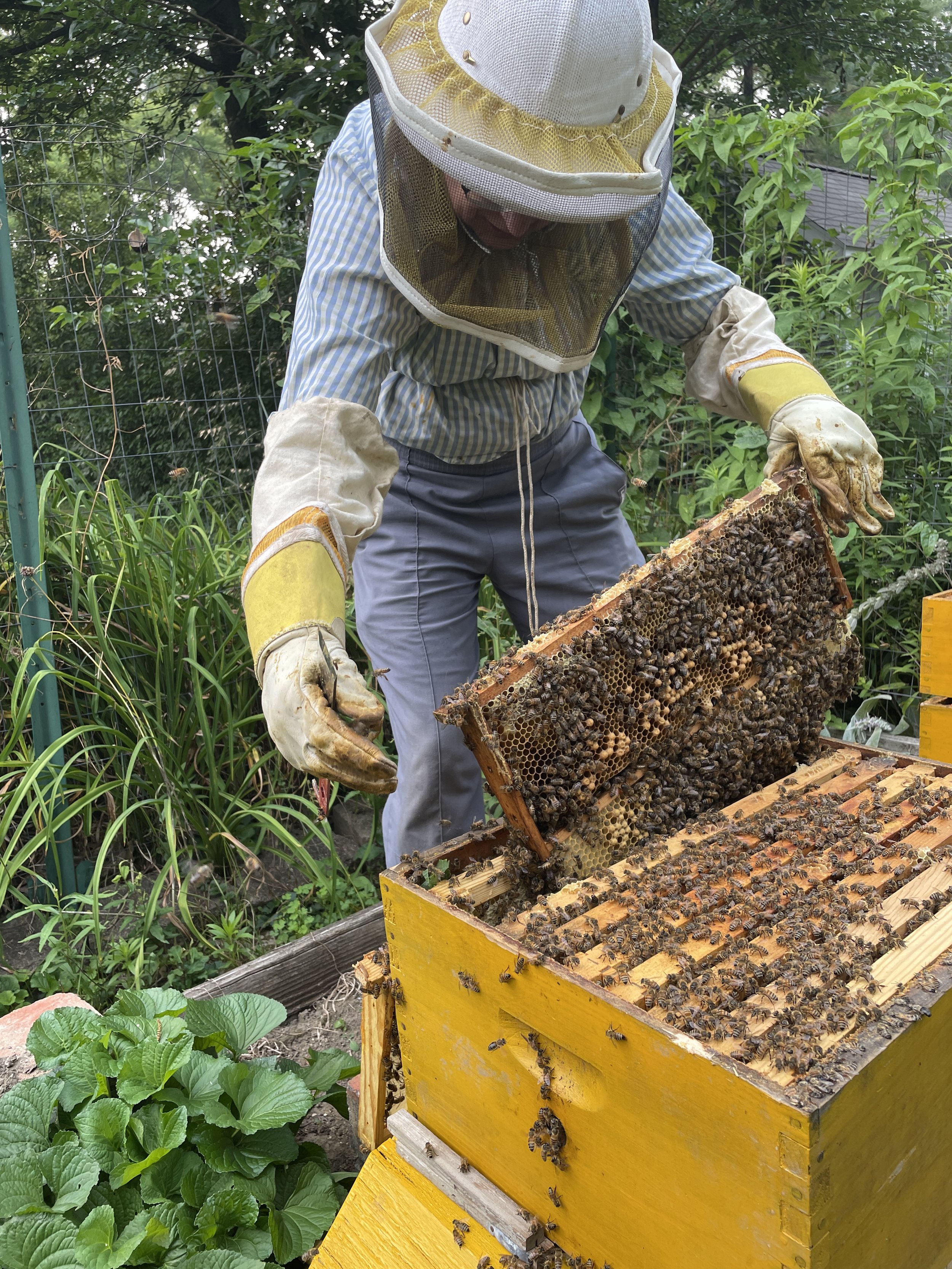
“Well beesides gratitude for pollinating some of my favorite things (apples, blueberries, peaches, basil, melons, sunflowers, and almonds) beecause bees are all the buzz in my backyard! 

Before and After

Let me tell you a roundabout story about how I came to be a beekeeper. 

In 2016, after my long time friend John Magee introduced me to native plants through his Native Plant Podcast, I made a commitment to learn more about how these specialized plants can positively impact the environment.  I sheet mulched over all the grass in ¼ of my backyard and committed myself to creating a native woodland.  Seven years later, I’m fully committed to planting native and to support the benefits it brings to our ecosystem.  My water bottle sports the slogan “I Plant for Pollinators”.  Pawpaw, foxglove beardtongue, great blue lobelia, cardinal flower, common chokeberry, wild geranium, red dosier dogwood, false solomon seal, wild ginger, anise hyssop, large-leaved aster, blue mistflower, oak, walnut, and more. I want it all! 

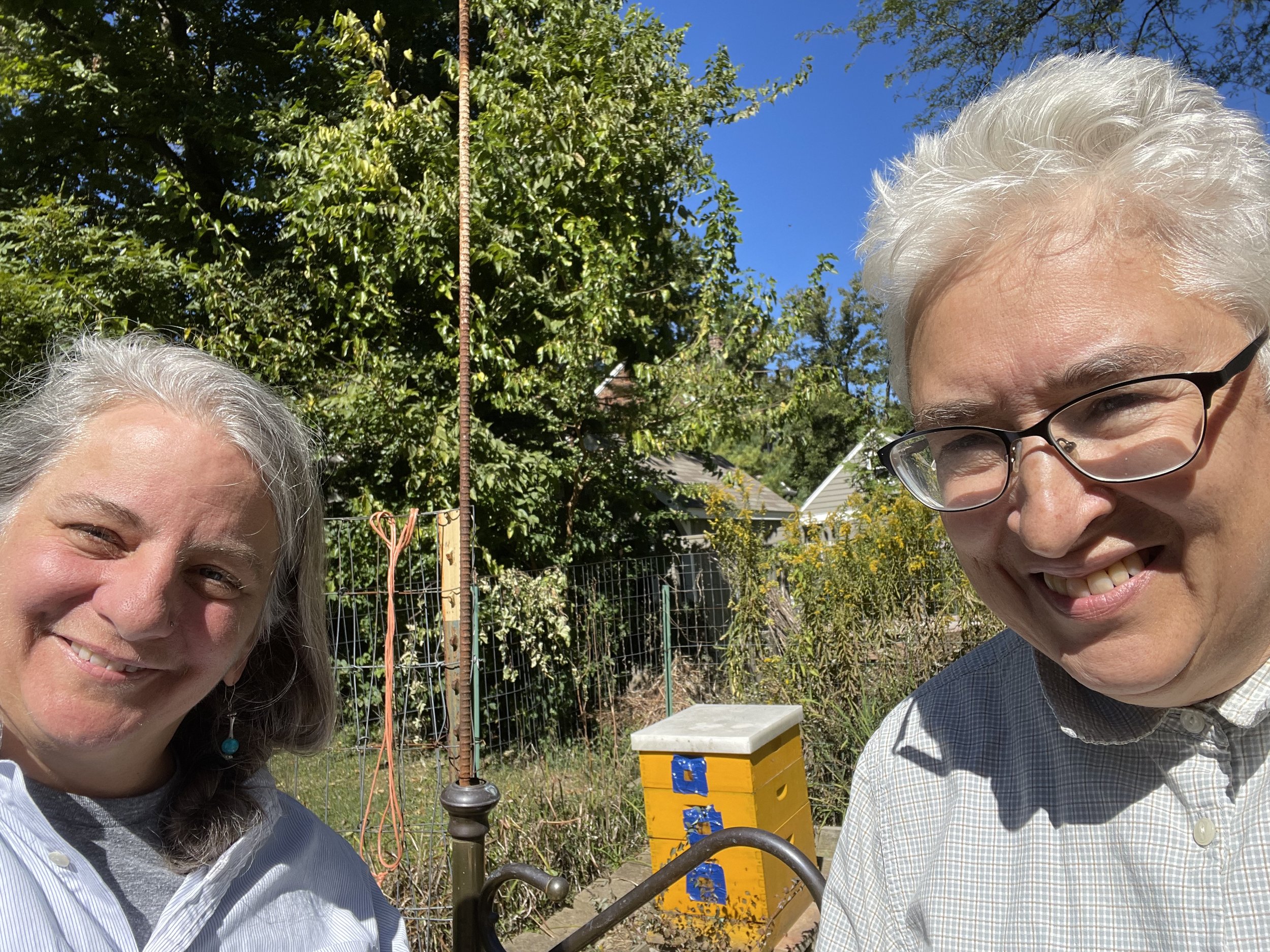
Fast forward to 2022, when a friend asked if I wanted to have a honeybee hive in my backyard and next thing I knew, I was a beekeeper.  Over the past year I have asked many questions and learned more than I ever thought possible about bees.

In my thirst for knowledge about my honey bees, I’ve also discovered that honeybees are NOT native to North America!  (So much for my native woodland!)  Maybe they are NOT native, but they are very important!

Of the 20,000 species of bees, only six or seven species produce honey.  One of these, the honeybee (Apis mellifera), was exported from Europe to North America in the 17th century to make honey & wax and for their pollination services.  They can be considered livestock animals, raised and managed by humans/farmers. Honeybees are highly social insects that live in colonies.  One queen reigns over a large family of female worker bee offspring and a handful of male drones.  The queen only leaves the hive once in her life, to take her mating flight, then spends the remainder of her days laying + or - 800,000 eggs over her lifespan (up to 5 years).

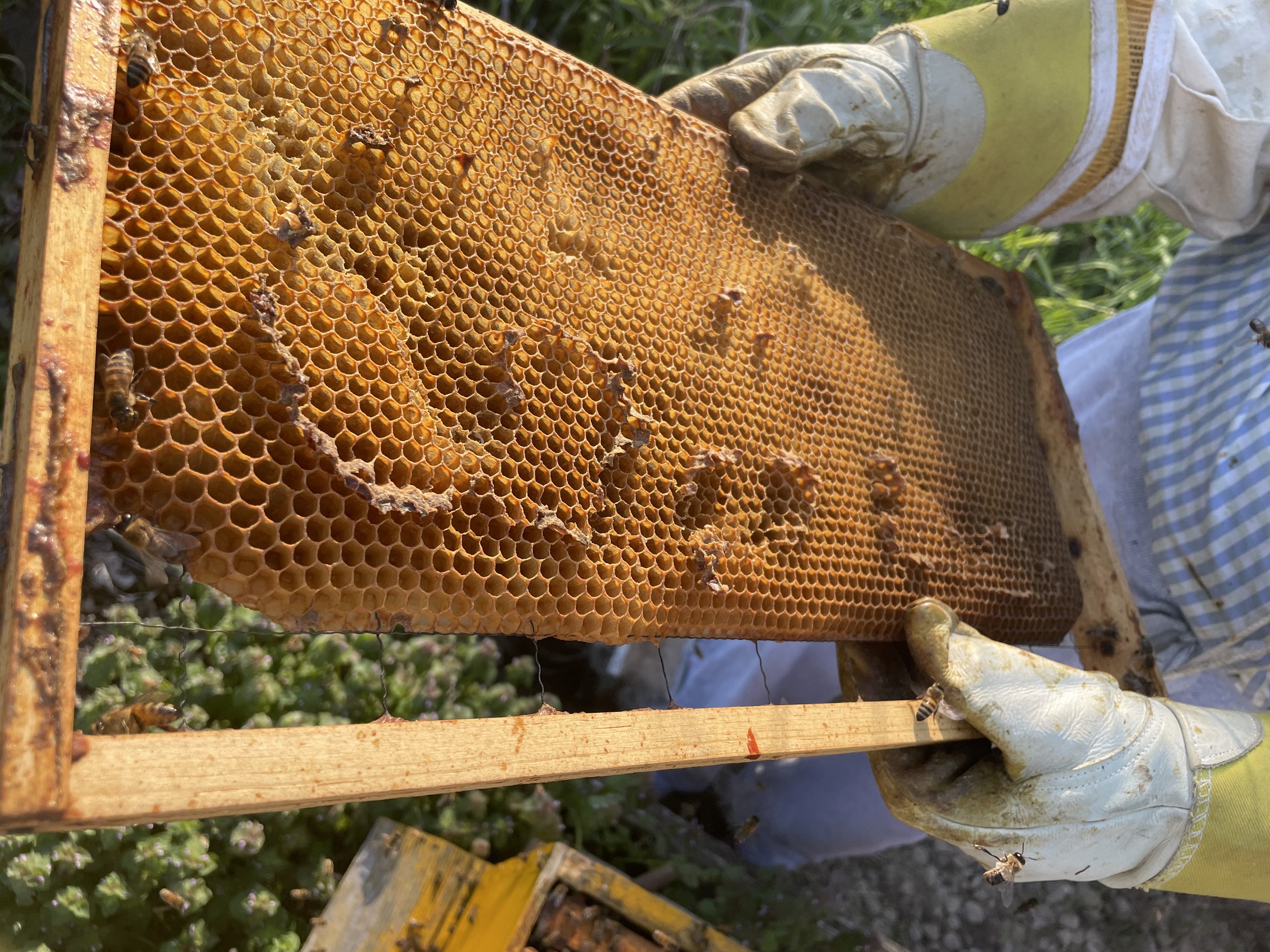
Honeybees are holometabolous insects and have four stages in the life cycle: egg, larvae, pupa, adult. 98% of the queen’s eggs will become female worker bees who live short but busy lives (approximately 30 days).  What about the other 2%?  Those eggs will become lazy male drones whose one important purpose is to mate with another hive’s queen, a process that literally kills him.

Courtesy of Howland Blackiston, Beekeeping for Dummies.

The female bees do ALL the work needed to keep a hive healthy and productive.  Sterile worker bees rotate through a specific sequence of jobs during their lifetime (cleaning, hive maintenance, temperature control, processing nectar, feeding others, building and repairing comb, guarding the hive, and FINALLY, foraging for nectar and pollen).  How, pray tell, do they know when to switch jobs?  Bees communicate with each other using pheramones (chemical messages), body language (sometimes called waggle dances), vision, scent, and taste!  Sometimes they move to a new job because their body no longer allows them to accomplish their current job (i.e. after about three weeks of life, the workers bees food and wax glands atrophy, so they shift to foraging duty).

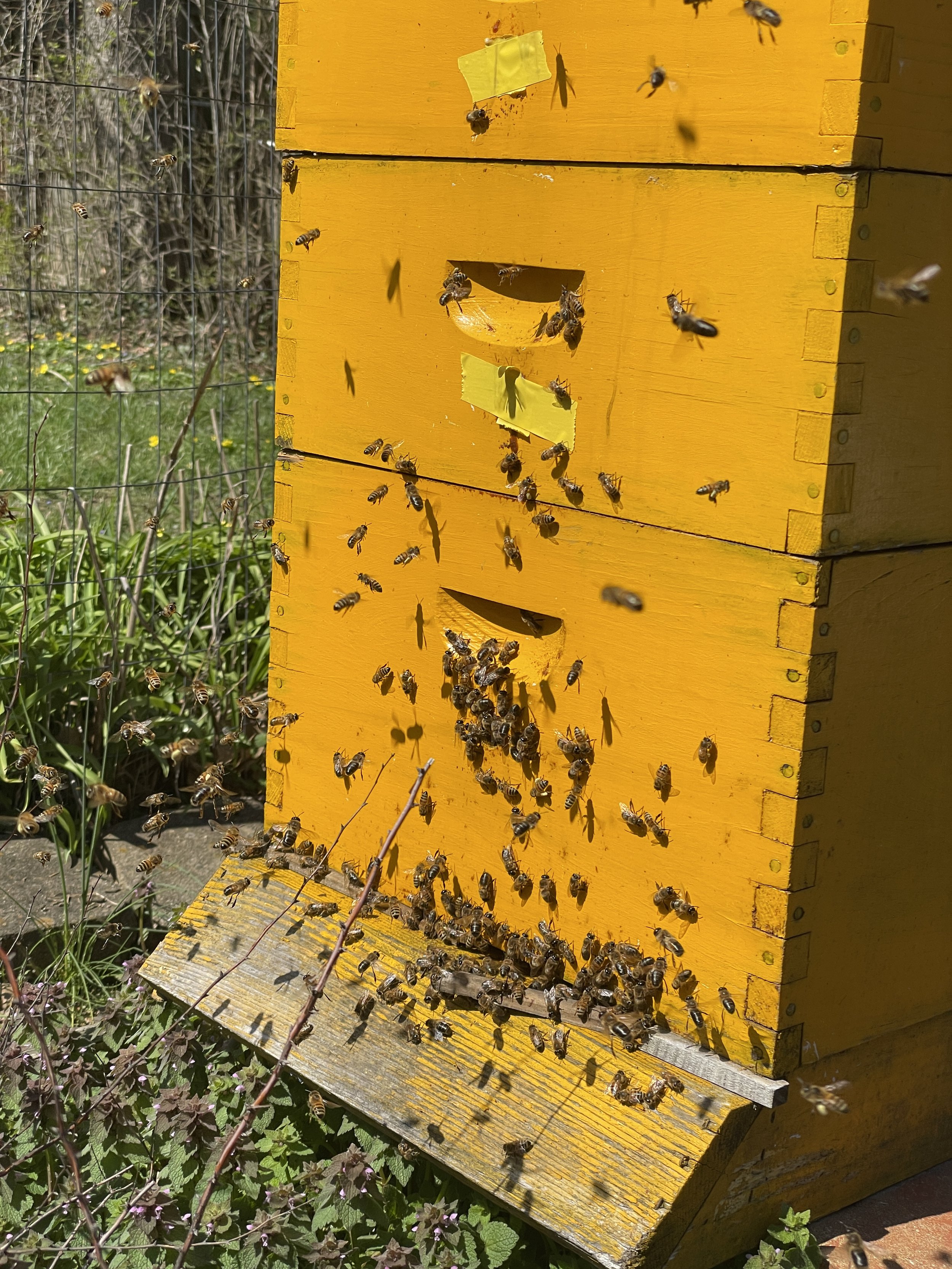
At any one time, 50,000-80,000 bees are living in a healthy hive….trust me that is a lot of bees to consider and even to listen to!

As I mentioned, only 6 of the 20,000 species of bees are “honeybees”.  That leaves 19,994 other species of bees, many of which ARE native to our region!  These other important native bees often live solitary lives or in small ground nests.  If you’ve ever heard of a “bee hotel”, those are meant for native bees. They are the reason many native plant gardeners do NOT keep clean and tidy garden beds in spring!  (They are waiting to cut down dry hollow stems until AFTER native bees have had a chance to hatch.)

Listen to the podcast about native bees

Native Melittology (INDIGENOUS BEES) with Krystle Hickman

Read More on the untidy garden bed!

Learn how to preserve habitat for native bees.

take a peek at the life of native bees

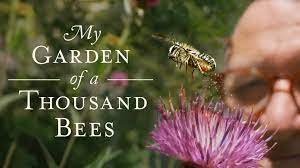
PBS documentary by wildlife filmmaker, Martin Dohrn.

Am I starting to sound like a MELLITOLOGIST?  To be honest, I’ve only touched on the tip of the iceberg of factoids I’ve learned so far….there is so much to know and so many questions still unanswered.  Each fact I learn seems more interesting than the one before.  On my current RESEARCH TO DO list is:  

What did the bee say the flower?
— "Hey Bud!"
  • How do bees make wax for the cells?

  • How does nectar become honey?

  • What IS propolis? How do they make it and from what?

  • Do bees have noses? How do they smell?

  • Do they find flowers by smell? If not, how?

  • When there is a swarm, how do they decide who stays and who goes?

  • When is a swarm considered “wild”? Is it wild or feral?

  • Why do bees buzz near my ears? Do they like/dislike gray hair or are they trying to make me think they are bigger than they are?

eating bees?

A yummy recipe!

Donate to MCA in HONOR OF THE BEES :)

Wildlife, at the Fringe

(VDV/Shutterstock.com)

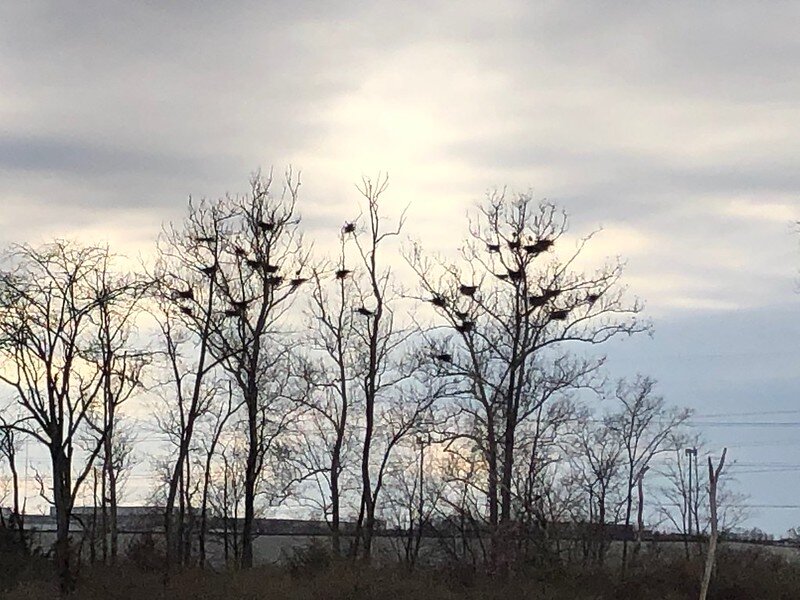
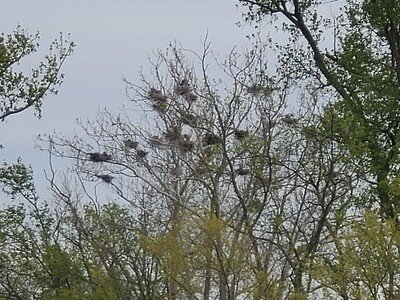
A heron rookery, aflutter with Great Blue Herons, has been spotted along the Mill Creek near IKEA West Chester in Butler County, OH!

What is a rookery, you say? It is a location where more than a pair of birds nest in a group. The number of nests, birds, and bird species can vary. The rookery is easily observed looking SW from the back of the IKEA building near the edge of the parking lot, across the retention pond to the opposite side.

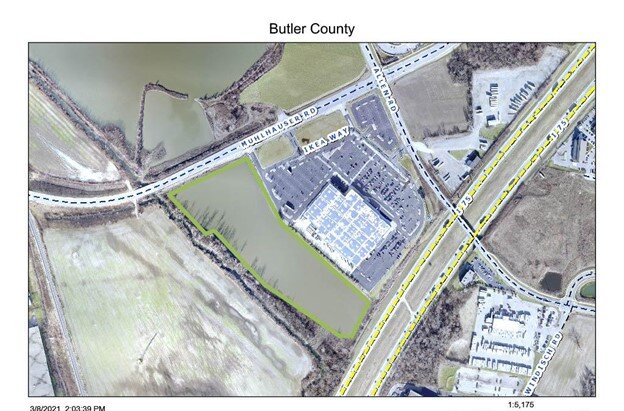
This is an encouraging development at the Mill Creek. The retention basin (highlighted by the green line in the map) sits in the Upper Mill Creek Watershed, where there has been a large, human-population increase over the past four decades. Land uses surrounding the basin are, primarily, commercial and light industrial. At the SW border of the pond, an edge of towering trees line the banks, offsetting a lack of tall canopy heights and foliage. The duration of this intact section of habitat is, most likely, a contributing factor to encouraging a thriving ecosystem of wildlife.

Protecting the herons. Birders have documented (using iNaturalist app) the presence of the Great Blue Heron at this location since 2017. There are 64 species of heron in the family Ardeidae. They prefer to live near water and feed on edges of marshes, lakes, and ponds. The environment of the rookery at the IKEA retention pond includes a newly planted tree buffer behind the building, the strand of tall trees on the banks of the Mill Creek, an isolated location off the beaten path, and plenty of fish; perfect for this siege of birds.


2021 Bioblitz.jpg

Want to take ACTION in wildlife conservation in the Mill Creek Watershed?

Cincinnati Parks & Great Parks created a local Cincinnati/Hamilton County team for City Nature Challenge 2021, a collaborative competition between cities across the world. There is nature all around us, even in our cities! Knowing what species are in our city and where they are helps us study and protect them, but the ONLY way to do that is by all of us – scientists, land managers, and the community – working together to find and document the nature in our area. By participating in the City Nature Challenge, from April 30 through May 3, not only do you learn more about your local nature, but you can also make your city a better place – for you and other species!

The City Nature Challenge, a bioblitz-style event, bouts cities against each other in healthy competition, to see who can:

●      make the most observations of nature

●      who can find the most species, and

●      who can engage the most people.

Join MCA for City Nature challenge 2021

The event utilizes the free iNaturalist platform (web and app) to record environmental data. In addition to City Nature Challenge 2021, participants can log photos of plants and animals they see in the Mill Creek Watershed to iNaturalist, throughout 2021. The information collected will be helpful in community programming and education, controlling invasive species, and prioritizing natural areas in need of further preservation efforts.

Your participation could make a difference!

To Get Involved:

  1. Download the iNaturalist app on your smartphone (or take pictures with your camera and upload them later to the iNaturalist website)

  2. Go outside! (with your phone charged and your spirit ready)

  3. Species documented in the Mill Creek Watershed during the City Nature Challenge will automatically be added to the Cincinnati Hamilton County Project and the MCA 2021 Bioblitz. If you like, become a member of the two open projects in the iNaturalist app:

inaturalist: MCA Bioblitz 2021 (year-Round)
Inaturalist: City Nature challenge 2021 (April 30-May 3)

May 2020 Historic Rainfall on Mill Creek

Source: https://msdgc.vieuxinc.com/

Source: https://msdgc.vieuxinc.com/

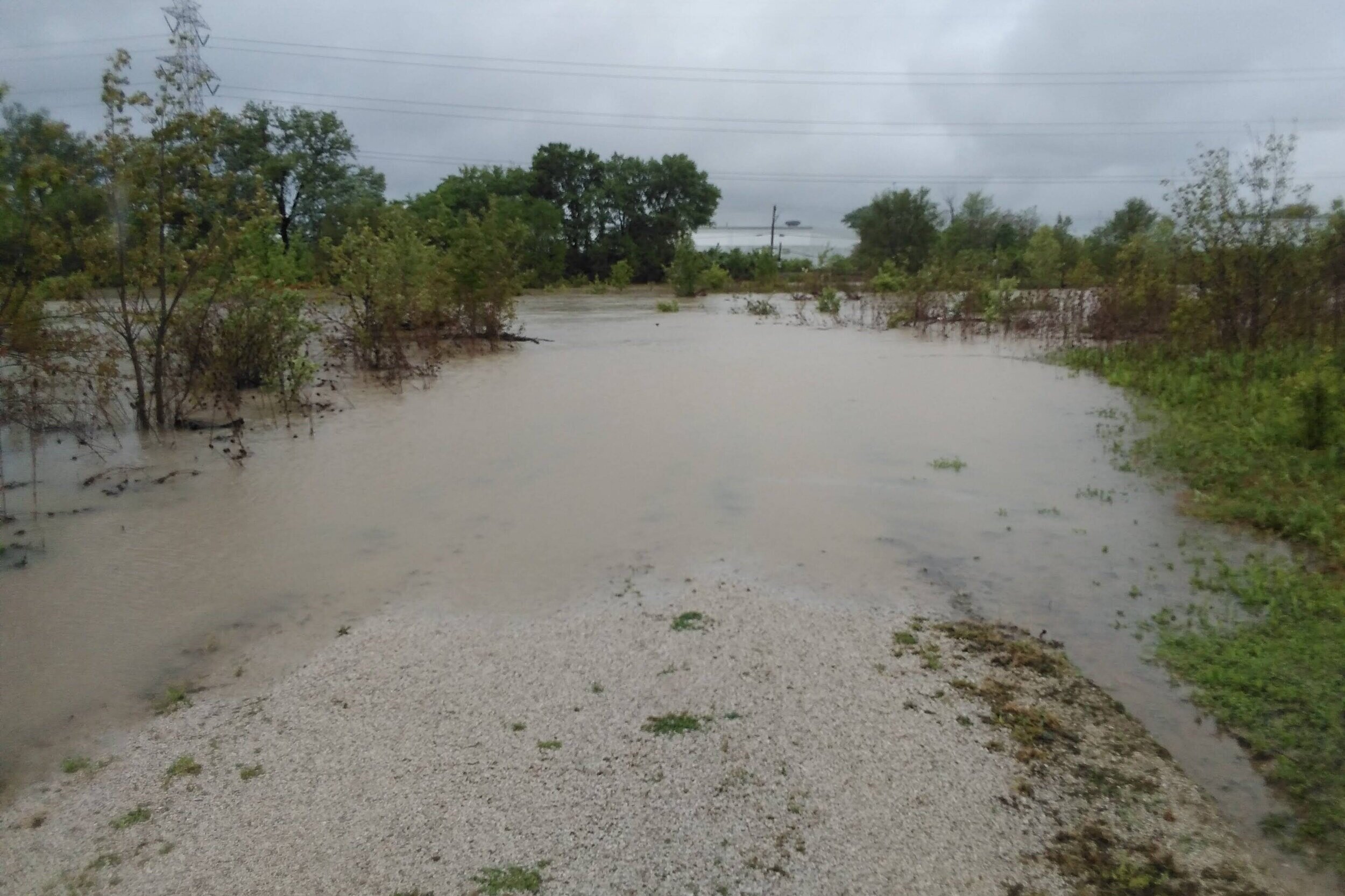
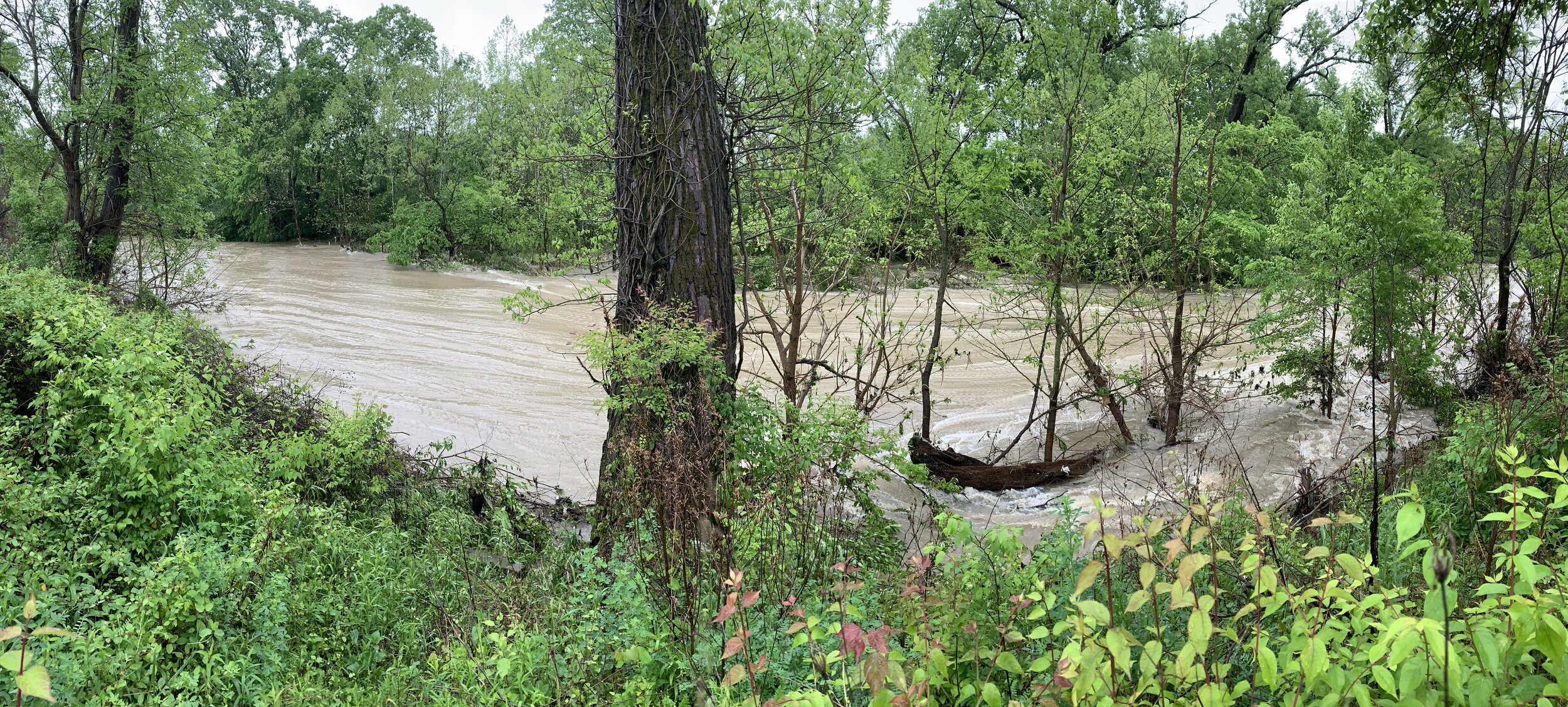
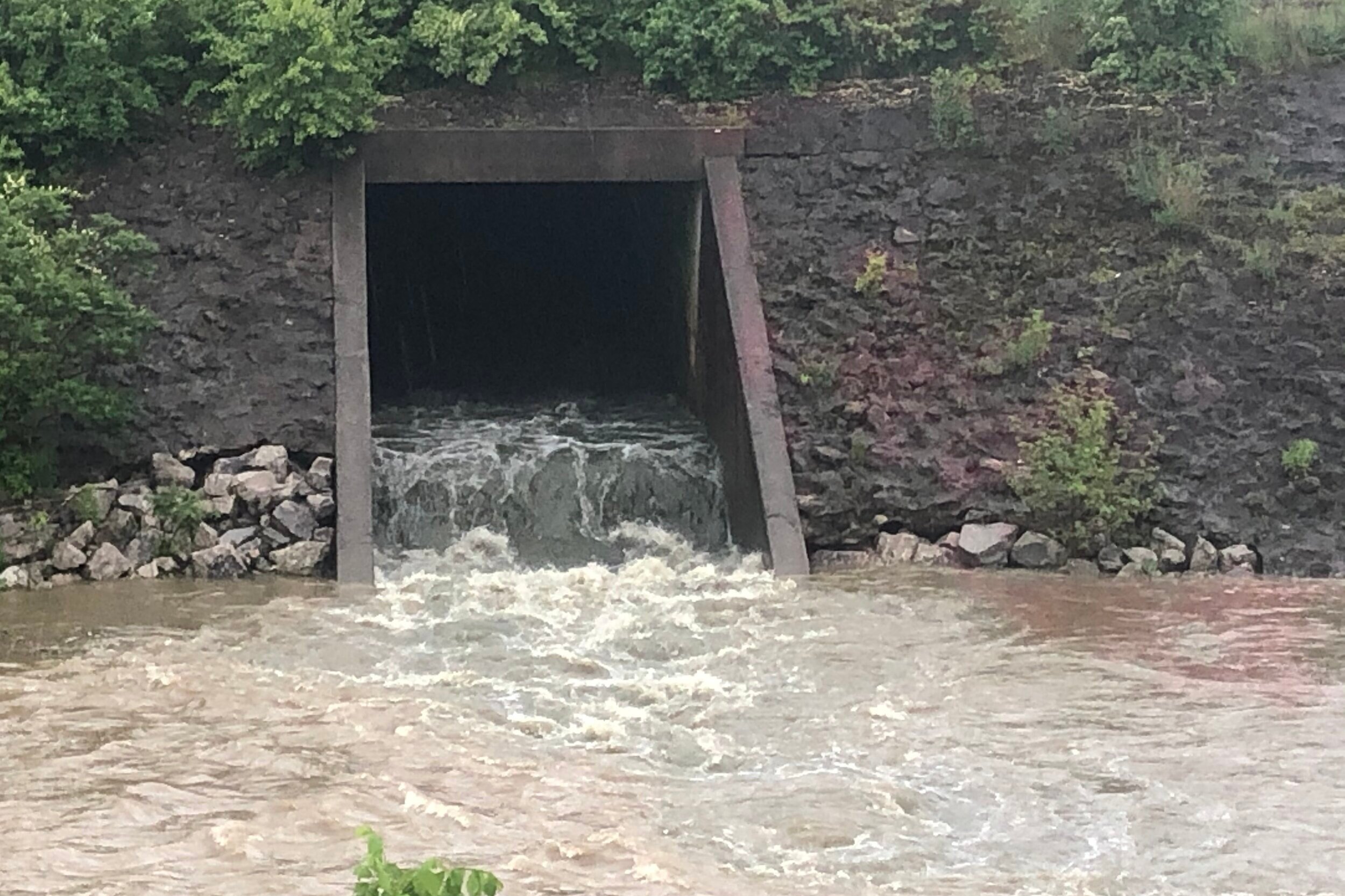
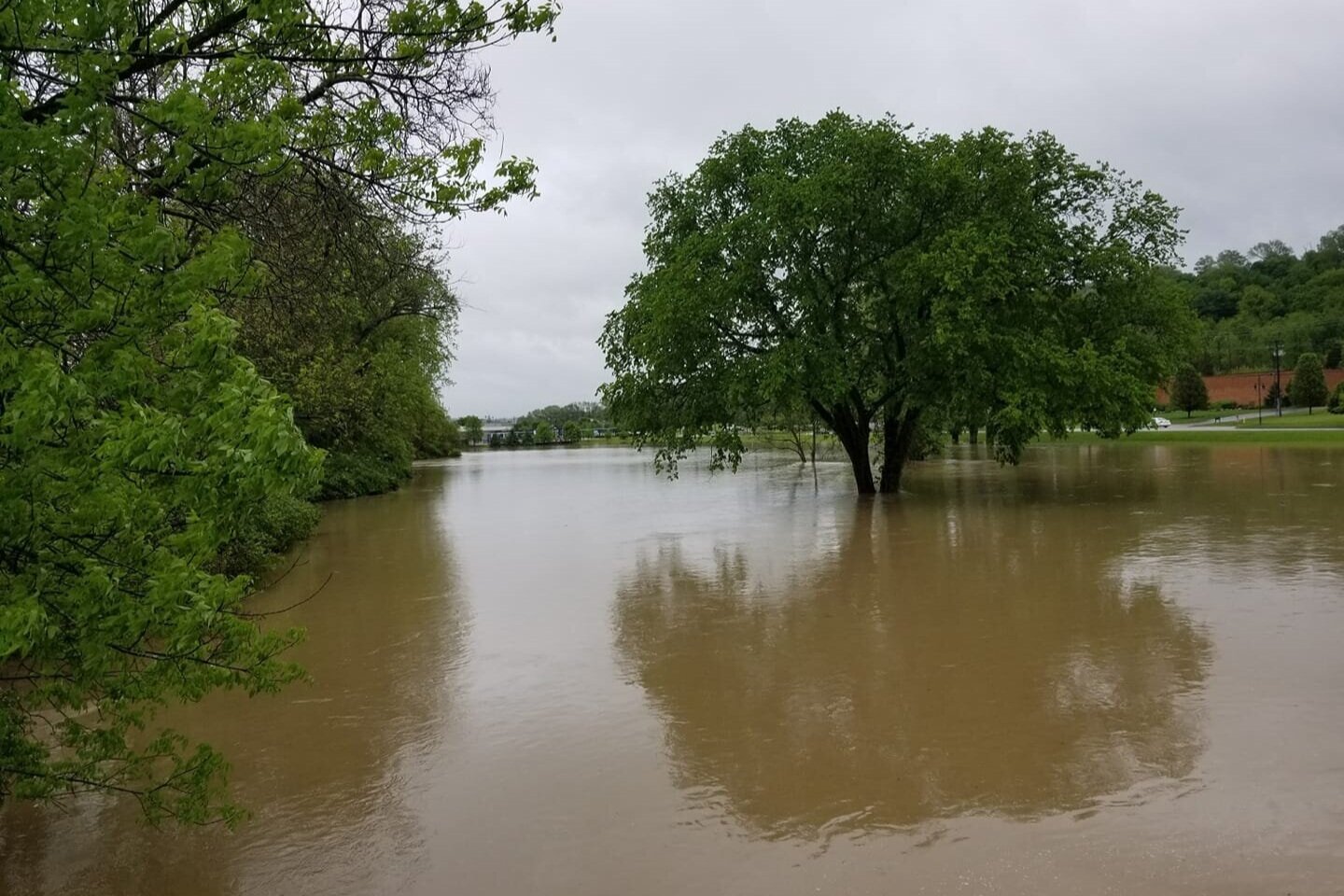
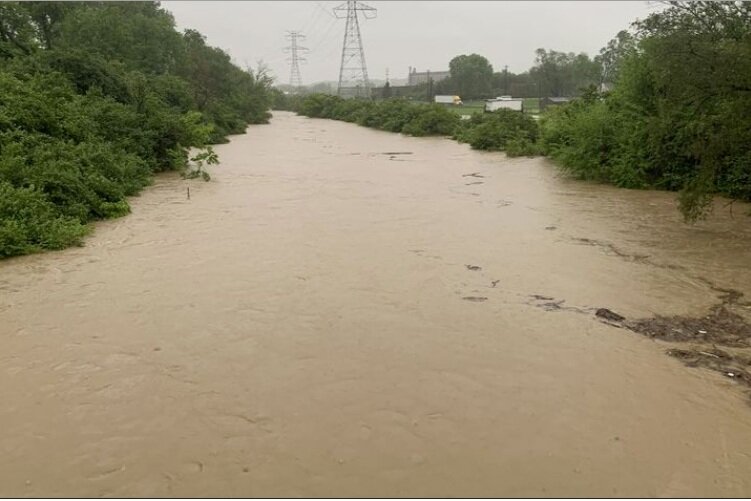
Where were you during the record breaking rainfall this past Monday, May 18, 2020?  We hope that you and your property weathered the “storm” and record breaking precipitation.  What did all that rain do to the streams near you?  We asked folks to submit pictures of the Mill Creek in their neighborhood and received a lot of responses.  See for yourself!

Source: https://waterdata.usgs.gov/nwis/uv?site_no=03259000

Historic rainfall means historic stream flow. All this rainfall eventually finds its way into our streams.  A rule of thumb is that for each 1” of rain on saturated soil, a 4’ rise in water levels results in our streams. 

Keeping in mind we had multiple days of rain, you can understand the 16 foot increase in the Mill Creek on May 18th.

Fun Fact:  You can monitor the rain on the Mill Creek yourself using the USGS (U.S. Geological Survey) stream gage in real time.  

This chart shows a typical stream flow at about 100 cfs (cubic feet per second).  This past week, the flow rate increased to 9,000 cfs in just two days!  That 100 fold increase of flow pummels the stream with 280 tons (the weight of 7 loaded 18-wheeler trucks) EVERY SECOND!  How can a stream possibly withstand that force?

Stream restoration projects address heavy rainfall events like May 18th. At the Mill Creek Alliance, we work with partners and communities to address opportunities and challenges in the Mill Creek Watershed.

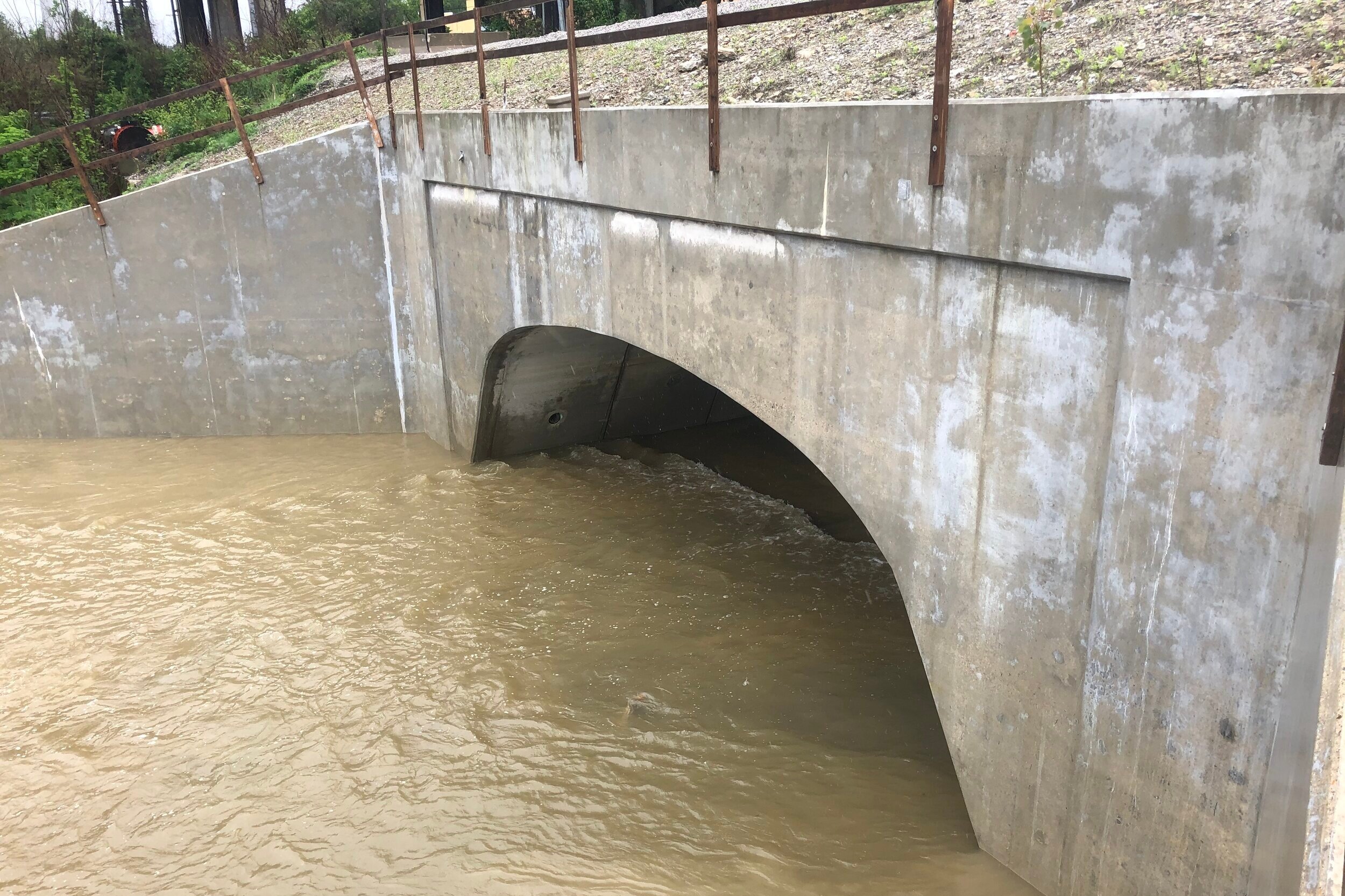
Look at these photos before and during the May 18 record rainfall along the Mill Creek Greenway Trail at Seymour Avenue near Caldwell Park It’s a short distance from the stream gage and the site of a 15 year old Metropolitan Sewer District of Greater Cincinnati (MSD) restoration project.

You can see some of the standard features of stream restoration and stabilization: (1) The streambank is “armored” with heavy rock.  (2) Deep-rooted native vegetation complements the stone work, traps sediment, and further “bioengineers” a stable streambank and (3) Rock vanes extend into the stream to dissipate the immense energy of flowing floodwaters.

Here’s a look at another Mill Creek Alliance restoration project upstream at the Evendale Commons in the Village of Evendale.  Before a flood, a stream channel is where a stream typically flows most of the year including the dry summer months. 

However, during a flood, streams need connections to a wide stream corridor and a floodplain where flood waters can safely be contained away from people and property.

We’re glad to see our projects hard at work as part of the natural infrastructure of the Mill Creek Watershed - a natural and community asset.

The Mill Creek Alliance thanks you for your ongoing support and intererest.  Stay safe everyone!


Lots of people share MCA’s love for water and the Mill Creek. Take a peek at one of our Facebook Friend’s video sharing how he dealt with this week’s precipitation! 

Mussels Return to the Mill Creek!

fatmucket2.jpg
fatmucket1.jpg

Last fall, freshwater mussels were reintroduced to the Mill Creek at two locations. These were the first mussels in Mill Creek for over 100 years.....we thought. At our first ever Mill Creek BioBlitz at Salway Park on June 1, a volunteer found a mussel shell at the upstream riffle we installed in 2018. The mussel has now been positively identified: it is a recent shell of a female fatmucket, also known as a yellow mucket. Although the species is widespread in the state, this is the first record of this species in the Mill Creek. It means it is quite likely that there are other mussels in the stream, at least below Salway. Larval mussels (glochidia) spread by attaching to the gills of fish, then later dropping off. By opening up more of the stream to fish migration, it’s open for mussel migration also.